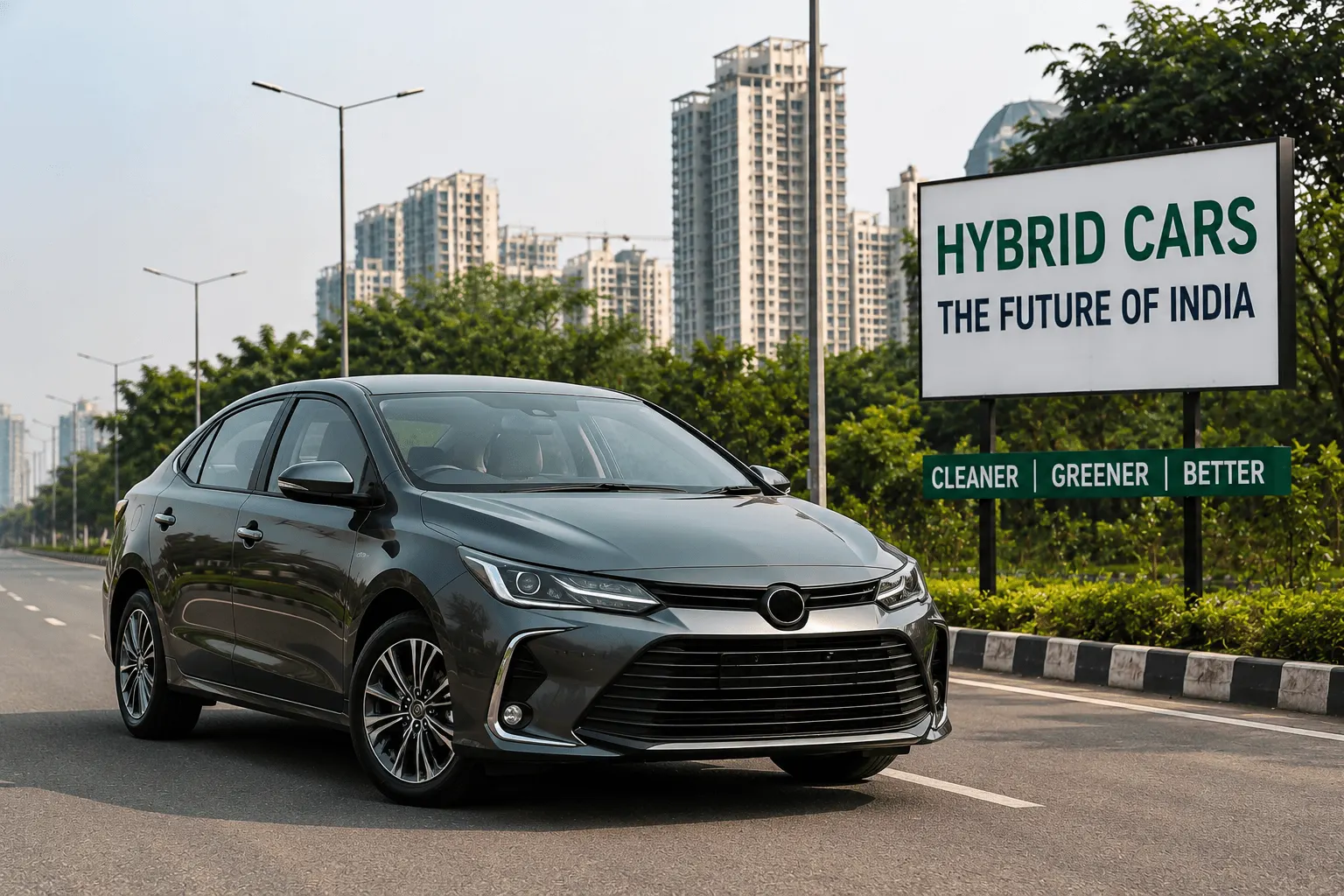
The Pragmatic Bridge: How Hybrid Vehicles Can Reduce India Oil Import Burden
Is India EV policy quietly turning into another import bill trap?
With India's crude import bill exceeding 132$ billion annually and 87.7% of oil demand met through imports, strong hybrid vehicles offer an immediately deployable, infrastructure light pathway to meaningfully reduce petroleum dependence without replacing one import vulnerability with another.
India dependence on imported crude oil is one of the most structurally persistent vulnerabilities in its macroeconomic architecture. In FY2023–24, the country imported 234.26 million metric tonnes (MMT) of crude oil a 0.67% increase over the previous year at a total bill of 132.4 billion dollar. While this represents a 16% decline from the 157.5 billion dollar spent in FY2022–23 largely owing to moderated global prices, the volume of imports continued to rise. Dependency on foreign crude crossed 87.7% of domestic consumption in FY2024 up from approximately 85% a decade ago.
In the first nine months of FY2024–25 alone India crude import bill rose 3.7% year-on-year to 102.5 billion dollar, with 179.3 million tonnes imported between April and December 2024. This trajectory is unmistakably upward: India crude demand is rising in lock step with GDP growth, urbanisation, and expanding vehicle ownership, with no significant countervailing force from domestic production.
The geopolitical dimension compounds the economic one. A majority of India hydrocarbons arrive from the Middle East, a region historically prone to supply disruption. Russia emerged as the single largest supplier to India in FY2023–24, accounting for 45.4$ billion worth of crude with Indian refiners averaging over 1.1 million barrels per day from Russian sources through early 2026. This shift, while economically rational, concentrates geopolitical risk in a different direction.
Against this backdrop, every percentage point of fuel efficiency improvement in India's vehicle fleet carries substantial fiscal and strategic consequences. The question policymakers must resolve is: which technology pathway reduces oil import intensity fastest, most cost-effectively and without generating new strategic vulnerabilities?
"Electric mobility makes economic sense in a country which imports most of its oil. However, the import intensity of EV production especially from countries with whom India has persistent and large trade deficits is very high."
Economic Survey of India, 2024–25
2. The Case for Strong Hybrids is an Efficiency Ledger
Strong hybrid electric vehicles (SHEVs) combine a conventional petrol engine with an electric motor and a compact battery pack typically 0.75 to 2 kWh that charges itself through regenerative braking and surplus engine power. Unlike plug-in hybrids, SHEVs require no external charging infrastructure. Unlike full battery electric vehicles (BEVs) they impose no demands on India's still developing public charging ecosystem and carry none of the range anxiety that continues to discourage uptake of EVs across Tier-2 cities and on long-distance highway travel.The fuel economy gains are substantial and verifiable. Models currently available in the Indian market. The Toyota Innova Hycross, Urban Cruiser Hyryder, Maruti Grand Vitara, and Honda City e:HEV deliver ARAI certified figures of 23–28 kilometres per litre, against 13–17 KMpl for comparable petrol only vehicles. The Honda City e:HEV, for instance, is rated at 27.13 kmpl. In real world urban driving conditions stop and go traffic, frequent idling, congested city roads the efficiency advantage of SHEVs is even more pronounced, since the electric motor assists precisely when petrol engines are least efficient.
Translating this to macro level oil savings, if India were to replace even 10% of its petrol passenger vehicle fleet with SHEVs achieving 25 kmpl versus a petrol baseline of 15 kmpl, the aggregate fuel savings would be significant enough to measurably reduce monthly crude import volumes. With passenger vehicle parc exceeding 35 million units even a marginal share shift carries national consequence.
3. The Import Substitution Calculus: Hybrids vs Full EV
The discourse around India's clean mobility transition has been dominated by full electrification advocates who frame hybrids as a retrograde distraction. This framing deserves empirical scrutiny. The central question is not which technology is cleaner in the long run. BEVs undeniably win on lifecycle emissions under a clean grid but which reduces total import dependency in the medium term, accounting for both crude oil and battery/mineral imports.
India Economic Survey 2024–25 sounded an explicit alarm: domestic automakers are heavily dependent on China for lithium ion battery cells and critical raw materials. India currently sources 75% of its lithium ion batteries from China, according to the survey. In FY2023–24, lithium ion battery imports surged 69% compared to FY2021–22, reaching 24,346rs crore, with over 84% of imports originating from China. Over 5 years India has spent more than 7 billion dollars on batteries alone.
China's stranglehold on the battery supply chain is structural, not incidental. It processes 60% of the world's lithium, 69% of nickel, 75% of cobalt, and controls over 90% of global anode and 80% of cathode production. This means an accelerated BEVs push without commensurate domestic battery manufacturing would risk substituting oil import dependency with critical mineral import dependency trading one vulnerability for another, and potentially one with more concentrated geopolitical risk.
Strong hybrids sidestep this trap by design. Their battery packs, typically 0.76 to 2 kWh are roughly 30 to 80 times smaller than the 30 to 75 kWh packs required by BEVs. The import intensity of hybrid batteries is correspondingly minimal. Each SHEV sold instead of a comparable petrol vehicle saves approximately 800 to 1,200 litres of petrol annually over 10,000 to 15,000 km of typical Indian driving, while generating negligible additional battery import burden.
Strong Hybrid vs Battery EV (Illustrative)
Sources: Economic Survey 2024–25
4. The Ethanol Multiplier


A strong hybrid running on E20 blend effectively combines two separate fuel import reductions: higher kilometres per litre through electrification and lower crude content per litre through domestically produced ethanol.
The EBP programme track record is substantive. Between ESY 2014–15 and July 2025, ethanol blending generated over 1.44₹ lakh crore in foreign exchange savings and substituted approximately 245 lakh metric tonnes of crude oil imports. For FY2025–26 alone, the programme is projected to save approximately 43,000₹ crore in foreign exchange and pay farmers around 40,000₹ crore according to a joint statement from ARAI oil marketing companies and vehicle manufacturers.
The strategic logic is clear: hybrids running on E20 compliant engines amplify the fiscal gains of the ethanol programme by consuming less total fuel while that fuel is already partially domestically sourced. This is a compounding dividend that pure EV mandates cannot deliver in the near term, given that electricity grids remain largely fossil fuel powered.
E20 fuel is supported by the government because it can reduce India crude oil imports and support farmers through ethanol production. It lowers emissions making it strategically useful for energy security and sustainability. However, many consumers feel it is not a complete “game changer” because ethanol gives slightly lower mileage and may increase maintenance concerns in older or non E20 compatible vehicles, while fuel prices have not reduced proportionately. So, from a balanced perspective, E20 may benefit the country in the long term, but the transition feels costly and inconvenient for some vehicle owners in the short term.
5. Nation and State Policy Architecture: Fragmented Incentives and Market Distortions
The policy environment for hybrids in India has been characterised by structural disadvantage relative to BEVs. Strong hybrid vehicles attract 28% GST plus a cess, resulting in an effective tax rate of 18–43% depending on vehicle length and price essentially identical to conventional internal combustion engine vehicles. BEVs by contrast attract a concessional 5% GST creating a significant price gap that does not reflect the actual import reduction profile for hybrid cars.
State level policy is beginning to correct for this inconsistency. Uttar Pradesh was the first state to extend road tax exemptions to hybrid vehicles in July 2024. Delhi Draft EV Policy 2026, uploaded by the state transport department, proposes a 50% exemption on road tax and registration fees for strong hybrid vehicles priced up to 30₹ lakh (ex-showroom price) valid until March 2030. A significant incentive that would reduce the effective on road cost differential with BEVs in the India capital.
The political economy of this debate is contested. Domestic EV manufacturers Tata Motors, Mahindra, Hyundai which do not currently offer strong hybrid models have lobbied actively against hybrid incentives arguing that they could slow BEVs adoption. Japanese OEM Toyota, Maruti Suzuki via its Suzuki-Toyota alliance, and Honda have naturally championed hybrid policy parity. The debate risks being reduced to a commercial lobbying contest rather than a dispassionate assessment of national energy interest.

Sources: SIAM (Society of Indian Automobile Manufacturers ); Federation of Automobile Dealers Associations (FADA); BusinessToday
6. Risks and Structural Limits
The case for hybrids is not without qualifications. Three structural concerns deserve candid acknowledgement.
Technology dependency:The Toyota Hybrid System powers every strong hybrid sold in India today from the Hycross and Hyryder to the Maruti Grand Vitara and Invicto (manufactured by Toyota Kirloskar Motor under the Suzuki-Toyota alliance). This concentration means India has effectively outsourced its hybrid technology stack to a single foreign entity. While Maruti is reportedly developing an in-house series hybrid system (slated to debut on the Fronx facelift) and the government PLI scheme incentivises domestic component manufacturing, meaningful technology localisation remains a work in progress.
Affordability ceiling:Strong hybrids command a price premium of 1–3₹ lakh over equivalent petrol variants. The cheapest SHEV currently available the Maruti Grand Vitara new Delta+ hybrid trim starts at approximately 16₹ lakh. This places the technology firmly in the upper mass segment, excluding the majority of Indian car buyers who operate in the sub 10₹ lakh range. Incentive architecture must be designed to bring hybrids within reach of the high volume hatchback and compact SUV segments.
The long run trajectory: Hybrids remain petrol dependent and will not achieve net zero compatibility without fuel decarbonisation. As India grid greens with the government targeting 50% renewable electricity by 2030 the lifecycle emissions advantage of BEVs will widen. Hybrids are best understood as a decade-long bridge technology not a permanent destination.
7. Policy Recommendations
A technology agnostic approach to clean mobility incentives, one that rewards actual import reduction performance rather than powertrain type would best serve India energy security objectives. The following measures merit serious policy consideration:
1. GST Rationalisation on Strong Hybrids
The current GST architecture penalises hybrids relative to BEVs without justification grounded in energy security analysis. An intermediate GST rate of 12-18% for certified strong hybrids benchmarked on verified fuel economy performance would narrow the price gap with petrol vehicles while remaining clearly below the BEV rate of 5%. This need not be a permanent concession: a sunset clause linked to a national EV fleet penetration milestone (e.g. 15% of new passenger vehicle sales) would preserve long term BEVs incentive primacy.
2. Performance-Linked Incentives Tied to Fuel Economy
India should develop a Corporate Average Fuel Economy (CAFE) compliance framework that credits hybrids and BEVs proportionally to their fuel consumption reduction over baseline rather than treating all non ICE vehicles identically regardless of actual import substitution delivered. This would give automakers a technology neutral pathway to compliance while rewarding genuine efficiency gains.3. PLI Extension for Hybrid-Specific Components
The Production Linked Incentive (PLI) scheme should be explicitly extended to domestically manufactured hybrid-specific components, power control units, electric motors, and small format nickel metal hydride or lithium iron phosphate battery modules. This would reduce the technology import dependency on the Toyota Hybrid System while building an indigenous industrial base that can eventually supply both hybrid and BEVs manufacturers.
4. Mandate E20 Compatibility Across All SHEV Models
Given that E20 blending is now a national mandate all strong hybrid models sold in India should be required to be certified E20 compatible, ensuring that the fuel and vehicle efficiency multiplier described above is realised in practice. This is a low cost regulatory measure that would amplify the forex savings from both the EBP programme and SHEV adoption simultaneously.
5. Resist Framing This as an Either Or ChoicePerhaps most importantly India policymakers must resist the pressure partly driven by commercial lobbying to treat hybrid policy and EV policy as zero sum. The data suggests that expanding the addressable market for cleaner vehicles overall through multiple technology pathways appropriate to different consumer segments and geographies will deliver better aggregate outcomes for energy security than mandating a single technology transition before the enabling infrastructure, manufacturing capacity and affordability conditions are in place.
Conclusion
India's annual crude import bill ran at over 130 billion dollars and during the Iran-Israel-US war oil import bill increased drastically. It is a structural drain on the Forex reserve, a source of macroeconomic vulnerability to global price shocks and a strategic liability in a world of increasingly weaponised energy supply chains. Strong hybrid vehicles are not a perfect solution to this problem. But in the 2025–2035 window before domestic battery manufacturing scales to meaningful levels before the charging network reaches Tier-2 and Tier-3 India before BEVs sticker prices fall within reach of the median buyer they are the most immediate infrastructure light, and import lean technology available to begin materially reducing petroleum consumption per vehicle Km driven.
The market has begun validating this thesis independently: SHEV sales more than doubled in Q1 FY2026 to 26,460 units and full year FY2026 sales of 1.23 lakh units represent a 35% YoY increase. Policy should follow the direction the market is already pointing not with unconditional enthusiasm but with clear eyed recognition that in the transition to a cleaner energy future the perfect must not become the enemy of the good.
Hybrids are not a trap. Deployed strategically with appropriate policy clauses, technology localisation incentives and complementary investment in BEVs and charging infrastructure. They represent a pragmatic and immediately actionable instrument of Indian energy security.References and Sources
Petroleum Planning and Analysis Cell (PPAC), Government of India : Import/Export of Crude Oil and Petroleum Products, 2024–25. ppac.gov.in/import-export
Ministry of Statistics and Programme Implementation, Government of India : Energy Statistics India 2025, Chapter 4: Foreign Trade and Prices. mospi.gov.in
Economic Survey 2024–25, Ministry of Finance, Government of India (January 2025) : EV import intensity and China battery dependency. Reported by BusinessToday: businesstoday.in
EVReporter : "Powering the future: Why India must localise EV battery production" (January 2025). evreporter.com
Observer Research Foundation (ORF) : "India EV Sector and the China Challenge" (August 2025). orfonline.org
Press Information Bureau, Government of India : "India Ethanol Push: A Path to Energy Security". pib.gov.in
BioEnergy Times : "ESY 2024–25: India achieves 20% ethanol blending in October" (November 2025). bioenergytimes.com
BusinessToday : "Delhi EV policy offers 50% road tax exemption to strong hybrid cars" (April 2026). https://transport.delhi.gov.in/sites/default/files/Transport/marquee-files/ev_policy.pdf
Financial Express Kochi / PPAC : "Crude import bill rises 4% in April–December" (January 2025). Reported via Magzter.
PRS Legislative Research : "Review of Policy on Import of Crude Oil" (December 2023). prsindia.org